 Dr. Natalie Lopez
Neck Pain: Common Causes, Home Tips, and When to Get Help
Practical ways to treat a stiff or sore neck at home and signs that it is time to seek an assessment.
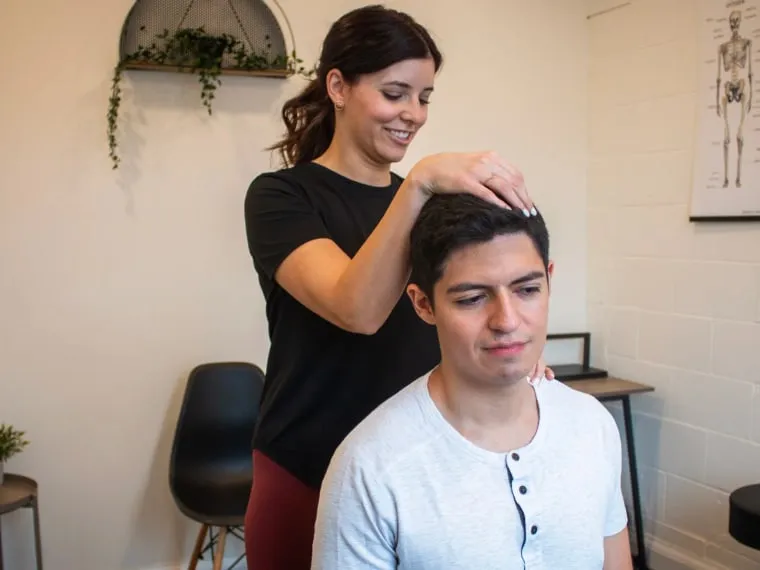
A stiff or sore neck can make it hard to turn your head, concentrate, sleep, drive, or exercise. It may begin after a sudden strain, or it may build gradually through repeated positions and everyday demands. This guide covers practical things you can try at home for mild stiffness, signs that an assessment may be useful, and symptoms that need prompt medical attention.
Dr. Natalie is a chiropractor in Oakville who sees neck pain daily, often in people who spend long hours at a desk, on a screen, or behind the wheel. Her first visit is a full 60 minutes, with time to understand the whole picture before recommending anything.
Why a stiff neck can take over your day
Neck pain rarely stays in the neck. When your neck is stiff or sore, it can affect how you sleep, how well you concentrate, whether you can turn your head to check traffic, and how comfortable you feel driving, working, or exercising.
Mild stiffness often responds to home care. The goal is to keep the neck moving within a comfortable range, reduce the activities that seem to aggravate it, and let the irritated tissues settle. If home care does not help, or the pain keeps coming back, an assessment is a reasonable next step.
Common reasons neck pain starts or builds
Neck pain does not always come from one clear event. Dr. Natalie often sees symptoms connected with a combination of daily activities, physical demands, and muscle tension:
- Long periods at a computer or looking down at a phone
- Repeated driving or commuting
- An uncomfortable sleep position or pillow setup
- Stress-related muscle tension
- Lifting, workouts, or other repetitive movements
- Carrying a bag or child mostly on one side
- A previous injury or a recent increase in activity
These are the patterns that load the neck unevenly or hold it in one position for too long. The neck is designed to move, and it does not love being held in a fixed position for hours.
What can you try at home for neck pain?
For mild stiffness or soreness, start with comfortable movement and small changes to the activities that seem to aggravate your neck. Do not force a painful movement, and stop if your symptoms clearly worsen.
Keep your neck moving gently
Unless a health care provider has told you otherwise, change positions regularly and try easy movements within a comfortable range:
- Slowly look left and right
- Gently tip your ear toward each shoulder
- Roll your shoulders back a few times
- Stand up and walk around every 30 to 60 minutes if you have been sitting
These are not stretches to push through. They are gentle ways to keep the neck from locking up.
Adjust your desk and phone habits
If your neck feels worse as the day progresses, change your setup and take breaks before the area becomes stiff:
- Bring your screen closer to eye level
- Avoid hunching over a laptop for hours without a break
- Use armrests or support when available
- Hold your phone closer to eye level instead of dropping your chin toward it
- Take short movement breaks before your neck starts to feel locked up
Use heat, cold, and sleep support
Heat or cold may help some patients feel more comfortable. Choose the option that feels better, place a layer between the pack and your skin, and stop if it irritates your skin or worsens your symptoms.
At night, aim for a position that feels supported and comfortable:
- Use a pillow that supports your head without tilting it sharply forward
- Keep your neck more in line with the rest of your body
- Avoid sleeping in a twisted position if possible
- Skip falling asleep on the couch with your neck bent awkwardly
When should you get neck pain checked?
Consider an assessment when neck pain is not improving, keeps returning, or begins to interfere with daily activities:
- It has lasted more than several days without meaningful improvement
- It keeps flaring up again and again
- You are getting regular headaches alongside it
- You feel limited turning your head in everyday situations
- It is affecting your work, sleep, workouts, or parenting
- The pain is radiating toward your shoulder or arm
- You have started changing how you move just to avoid the pain
If you are unsure whether an assessment makes sense, a free 15-minute consultation is a low-pressure way to ask. Dr. Natalie can tell you whether chiropractic care fits your situation or whether another provider would be a better next step.
Red flags: when to seek medical care right away
Some symptoms should be checked by a medical professional promptly:
- Neck pain that started after a significant injury, such as a fall
- Severe weakness or numbness in your arms or hands
- Pain that shoots down your arm and is intense or getting worse
- Neck pain that comes with fever or feeling generally unwell
- Sudden, severe pain that came out of nowhere
- Symptoms that are clearly worsening rather than slowly improving
If any of these apply to you, seek medical care before pursuing manual treatment.
Why neck pain sometimes keeps coming back
Recurring symptoms can have more than one influence. A muscle that keeps tightening may be responding to a joint that is not moving well, a movement pattern that loads the area, a sleep setup that leaves the neck unsupported, stress, or a combination of these.
This is where an assessment helps. Dr. Natalie can assess whether daily positions, activity demands, muscle tension, jaw clenching, sleep setup, or another factor may be contributing. When the pattern is understood, the plan can address the drivers rather than only the symptom. That is why her visits are a full 60 minutes, with time to look at the whole picture, not just the spot that hurts.
Ready to get your neck pain checked?
If neck pain is affecting your work, sleep, driving, or exercise, learn more about neck pain care or book an appointment with Dr. Natalie.
Book with Dr. Natalie at rosannacheng.janeapp.com, or call 647.799.5155.
Dr. Natalie Lopez · 3050 Preserve Dr, Oakville, ON L6M 0T9 · (647) 799-5155
Hours: Tuesday 4:00 PM – 8:00 PM · Thursday 11:00 AM – 8:00 PM · Saturday 10:00 AM – 3:00 PM
Book an appointment with Dr. Natalie: Book online
Or call (647) 799-5155.
Related Services

Want to talk about your situation?
Book a free 15-minute consultation or plan a first visit with Dr. Natalie at Preserve Oak Wellness.